Hiển thị các bài đăng có nhãn Fashion. Hiển thị tất cả bài đăng

Patrick Demarchalier: In Vogue


Over the years, consumers have come to expect a certain quality when it comes to magazine covers and editorial prints. Whether it's in the pages of Vogue or Vanity Fair, people expect to see subjects lit by soft light against stark grey backdrops or gorgeous mansions. Creating photographs like these becomes a challenge when the photographer has to jump from portraiture to fashion to fine art. One photographer who makes the whole business look easy is Patrick Demarchalier.


Patrick Demarchalier is one of the fashion industry's foremost photographers. He began taking photographs at the age of 17 when he received a Kodak camera from his step father. He later moved to Paris and became a photographer's assistant, learning the tricks of the trade while on the set of magazine photo shoots. Demarchalier also worked in a photography lab, developing his negatives himself. He eventually climbed his way into becoming an assistant for a French Vogue magazine photographer before becoming one himself.

Demarchalier's first photographs for French Vogue caught the attention of one Condé Naste editor who brought him to New York in the early 1970s. He first worked on Glamour Magazine before being tasked to work on Vogue USA. Despite not knowing a word of English at that time, he soon became one of the most sought-after photographers in the fashion industry


Demarchalier's early years in New York helped him develop as a photographer as he was able to work with other notable photographers such as Henri Cartier-Bresson. He also got to work with the most famous fashion designers and supermodels of the 1970s. It was around this time the modern look and style of the fashion magazine were established, and Demarchalier played a big role in this format.

In 1993, Demarchilier shot Janet Jackson naked from the waist up save for a pair of hands covering her breasts. The photograph was used for a Rolling Stone magazine cover, and became one of Jackson's album covers. In 2009, the photographer appeared in the fashion documentary "The September Issue", a behind the scenes look into one of the fashion industry's most anticipated monthly magazine. In 2010, Demarchalier was one of the featured photographers in America's Next Top Model (Cycle 15).


Over the years, Demarchalier has jumped from one project to the next, but his heart remains with fashion. While his photographs might share the same look, he says that it's because of the lack of innovation in the fashion industry. He says, "Things change. Then, after a while, they come back. So things get longer and longer and longer. And then they get shorter and shorter and shorter. And at the fashion shows, people say, 'Ah! Fantastique!' - but things were like that 10 years ago; they go around. Only amazing designers think of the truly new."

Still, his photography has helped establish the classic look of the fashion magazine industry. In an industry that's bursting with new and talented photographers, fashion designers, set designers, make-up artists, and models, it's amazing how Demarchalier continues to stay relevant and innovative.


For more images by Patrick Demarchalier's images of Vanity Fair, Vogue and W nagazine, check out his website here. For printed editions, there are Patrick Demarchelier, Dior Couture and Patrick Demarchelier: Forms.


JJ Levine: Gender Switch


In the history of photographic portraiture, some of the best portraits are those that reveal a small truth about the subject that is rarely seen in most cases. Whether they're shot in a studio, or taken in the subject's natural environment, a good portrait shows who the person really is deep down inside, or who really wants to be. Artist JJ Levine turns that concept on its head with "Switch", a doubly double portraiture series on gender.


JJ Levine is a gender-queer portrait artist whose work primarily deals with sexuality and gender. Levine (who prefers to be referred to as "they" instead of "he" or "she") has been a guest lecturer in different universities regarding gender studies, and has exhibited in different galleries and art festivals.

Levine has a yearly portfolio of portraits entitled "Queer Portraits" which shows transgender or queer gender individuals relaxing in their homes. Each person in the series is someone who has had a strong relationship with Levine; a family member, a friend or a lover. In "Alone Time", two models are photographed in their home, doing ordinary things couples do. The catch is that the two subjects are really only one person playing the role of both the guy and the girl in the relationship.


The series "Switch" is a brilliant extrapolation of Levine's earlier works. A viewer giving these images a passing glance might say that these are just nice double portraits of two couples in prom-style suits and dresses. A closer inspection will reveal that these aren't four different people, but two models who switch attires between each take.

Levine plays around with the conventional ideas of portraiture: strong distinguishing features between male and female roles (accented by the prom-like attire), masculine and feminine poses, dark and pastel colors, and others small details that might not be given a second glance in an ordinary portrait. Here however, the presence or absence of each gender aspect accentuates the differences.


Some of these "switches" are so convincing that it's hard to tell what the original biological genders are for each pair, which is exactly Levine's goal with these portraits. According to the artist, "My aim is to problematize preconceived notions regarding sex, gender, and the body in addition to complicating the identities of the subjects whose ‘true’ genders are never disclosed."

Indeed, the individuals in these portraits play their parts so convincingly that gender almost becomes a non-issue. However, it is ironic that by showing how flexible gender can be through these photographs, Levine also draws attention to the strong gender division brought about by a simple wardrobe change. This is reminiscent of JeongMee Yoon's Pink & Blue Project which shows how ingrained color association is with young boys and girls. Still, Levine successfully makes gender issues the main issue, drawing deeper question about identity, perception, and even fashion.


This is JJ Levine's website. The "Switch" series is here. For a different take on gender issues and how boys and girls begin learning gender differences, take a look at JeongMee Yoon's Pink and Blue Project.

Scott Schuman: Light Catcher


Scot Schuman of The Sartorialist blog continues to inspire photographers and fashion enthusiasts all over the world with his simple yet powerful images of ordinary people with extraordinary fashion sense walking the streets of New York, Milan, London, and other metropolitan cities. Now the photographer cum "Light Catcher" will be releasing his new book, "Closer" on August 29 and is sure to entertain and inspire countless others for the very same reasons.


Over the years, Schuman's Sartorialist blog has grown from being a simple site with pretty pictures of pretty people to a dedicate website showcasing the best sartorialists of each city he visits. In particular, Schuman has found a way to harmoniously unite the subject with the city background, all of which are painted with just the right kind of natural light.

Be it hard light...


Or soft light...


Or filtered light...


Go over to Scott Schuman's The Sartorialist blog for more "light catching" moments. Check out the previous Reel Foto feature here, and his video mini-documentary over here. You can pre-order his new book, "Closer" either as a Limited Edition, or as a Paperback Edition, which comes in Male Cover or Female Cover variants. His first book, The Sartorialist is still in publication. Schuman is also holding a contest to give away a free copy of his new book over on his website.

Terry Richardson: No Controversy


Some photographers have reached a controversial status because of the sensitivity of their subject matter. Artists like Sally Mann have gone through intense media scrutiny for the nudity in their photographs, but after the initial uproar, most critics agree that their work bears immense artistic value. One contemporary photographer however has gained famed not just for his photographs, but also because of the way he makes them. That photographer is Terry Richardson. (WARNING: This post contains NUDITY).


Terry Richardson started photographing when he was in high school. Since then, he has photographed for different magazines such as Vogue, Harper's Bazaar, and GQ. His images have now been celebrated in his first exhibit entitled "TERRYWOOD".

Browsing through this post, you might notice what element makes Richardson's images so popular: raw sexuality. There are no hidden agendas or subliminal messages here, only in-your-face eroticism, plain and simple. Richardson is not shy about sexual photographic escapades and frequently updates his blog with outtakes from his latest (nude) photo shoot.


Richardson's style of photography is actually quite mundane; an on-camera direct flash lights up the subject against a bare white wall. This has the effect of making most of his shots look like test shots, but for those images that are published, they peel away any pretentiousness from the subject. Thus, celebrities and models alike are stripped bare and made to look ordinary.

The photographer's claim to fame (or more accurately, notoriety) isn't the camera equipment he uses, but the way he carries out his photo shoots; Richardson has been accused multiple times of being too sexually aggressive with younger female models on his set. One model describes that during a usual photo shoot with nude models, Richardson ..."touches you and he goes further and further. But you’re surrounded by his assistants and they are validating his actions."


Amidst the accusations of sexual harassment, some of Richardson's colleagues and model friends have defended his behavior. Some models say that Terry doesn't pressure you "... to do anything you're not comfortable with." Many celebrities have also explicitly chosen to work with Richardson, from Lady Gaga collaborating with the photographer for almost a year to produce their new photo book Lady Gaga x Terry Richardson, to model Kate Upton dancing in the viral Cat Daddy video under the photographer's direction.

For as long as photography exists, controversy will follow, but what defines a just photograph? Is the photographer just as accountable for his images as he is for his behavior creating those pictures? Or is the final product worth any and all kinds of behavior off-screen? What then defines a justifiable photograph and photographer? It seems like for as long as Richardson continues his career in the medium, these questions will hound him wherever he goes.


You can find more controversial photographs on Terry Richardson's website. His blog also has more nude images. If you want to go to the other side and read more about the scandal behind the photographer, read this Jezebel.com article. If you want published images, go for Lady Gaga x Terry Richardson, Terryworld (Taschen 25th Anniversary) and The Vice Guide to Sex and Drugs and Rock and Roll.

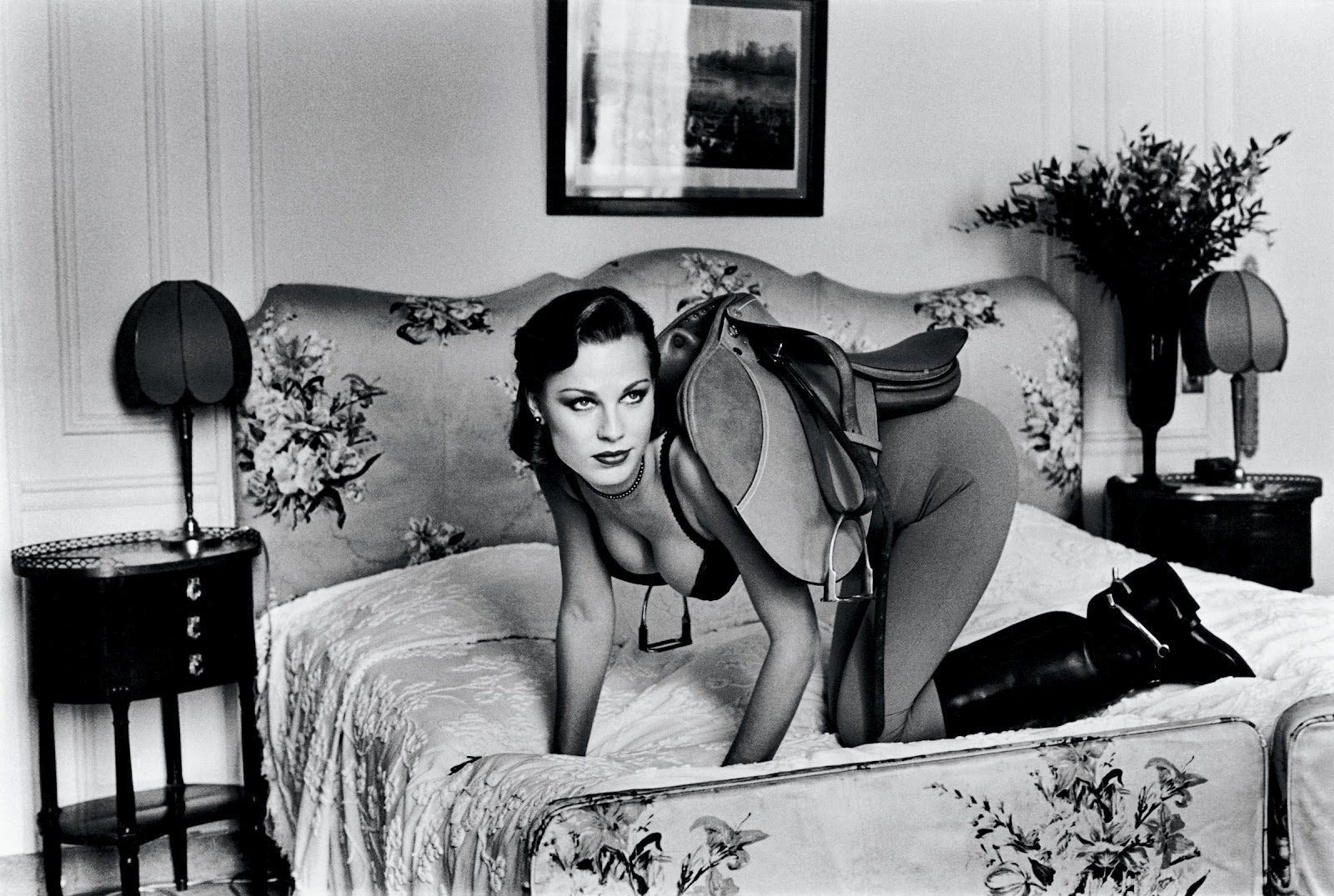
Helmut Newton: Bare and Naked Fashion


Turn the pages of almost any fashion magazine and it's very likely that you'll find a scantily clad lady or ladies in a number of advertisements. While most of them will be very tame compared to the bare and naked fashion photographs of David LaChapelle and Herb Ritts, these images wouldn't exist without the pioneering work of the fearless Helmut Newton.


Helmut Newton first became interested in photography as a boy, but events in his young life meant that he wouldn't be able to fully practice it professionally until much later in life. He was born to a Jewish family in Berlin, and while he had a relatively sheltered childhood, the growing anti-semetism in the country forced him and his family to flee in 1938.

Newton left Germany and arrived in Singapore and then travelled again in 1940 to Australia. During his stay in the country, there were some opportunities for him to pick up his camera, but the circumstances back then forced him to other methods of livelihood, first as a fruit picker, then as truck Driver in the Australian Army. It was only after the end of World War II in 1946 that he became serious about photography, opening up a fashion studio in Sydney. A year later, Newton met Alice Springs who would become his wife and lifelong partner in his photography career.


Newton's name has been associated with the fashion magazine Vogue as far back as the 1950s, and his relationship with the magazine began just as he was becoming successful with his photography in Australia. After having exhibited a few of his works as part of the new artistic movement in the country, Newton was invited to shoot for Australian Vogue in 1956. In 1957, he left for London to shoot for British Vogue.

In 1961, Newton moved to Paris and it was here that his now famous style of photography began to develop. His images became more erotically charged and gained an aggressive sexual undertone in them. Many of his now famous publications were shot in or around the city, including "White Women" (1976), which revolutionized the fashion industry with its stark black-and-white nudes, "Sleepless Nights" (1978) which contained even more fetish-like photography, and "Big Nudes" (1981), which became his best seller.


Of course, Newton's images sparked much controversy, and while one camp praised his forward and fearlessly erotic style, another was condemning him for his weird and hypersexual themes that bordered on the edge of softcore pornography. Even today, some musuems refuse to exhibit his work because of the nudity involved.

While no one can argue that sex was indeed a major part of Newton's style, it would be unfair to stop right there and dismiss the beautiful photographs that he created. At the end of the day, Newton aimed to photograph the subjects that he believed to be beautiful. Fortunately for some readers, those subjects mostly turned out to be naked women.


The Helmut Newton Foundation carries on the late photographer's legacy. Newton's bare and naked fashion photographs are available in dozens of hard copy editions, but the most popular include Helmut Newton: Sumo, Helmut Newton: Polaroids and Helmut Newton: the stern years 1973-2000 (Stern Fotografie) (English, German, English and German Edition).


Gordon Parks: Issues in Black and White


Most photographers stay true to their field of specialty; rarely do photojournalists successfully delve into studio portraiture without going back to their documentary background, and vice-versa. There are of course a few rare instances where a photographer can go beyond his field and be recognized internationally. Gordon Parks is one who jumped from one field to another, dealing with different issues in black-and-white and in color, all with seemingly little difficulty.


Gordon Parks' name might mean something different depending on who you ask; to a photojournalist, he's known for his memorable images on poverty and civil rights, to a fashion photographer, he's remembered for his 1960s portraits of Parisian women, to a film enthusiast, he's known for his documentaries and films on black issues.

Parks first became interested in photography in 1937 when he saw pictures of migrant workers in a magazine. After getting his feet wet in the industry, he became a fashion and portrait photographer on the encouragement of Marva Louis, Joe Louis' wife. In 1942, he began photographing for the Farm Security Administration (FSA), the very same organization which sponsored the photographers who captured these fine images. It was also around this time that he photographed his "American Gothic", a stoic portrait of cleaning lady Ella Watson (header photo above).


After the FSA disbanded, Parks moved to the Office of War Information (OWI), but he later left due to the anti-black sentiment he found there. The move gave him a chance to rediscover fashion photography; he was soon photographing for Harper's Bazaar, Glamour, Vogue and Time magazine, with his more famous fashion photos being done in Paris.

By the 1960s, Parks had moved on to films, first directing in "The Learning Tree", a film based on his semi-autobiographical novel, and then later on the hit movie "Shaft". It was also around this time that he covered the civil rights movement, taking portraits of Malcolm X and the people around him.


Towards the end of his life, Parks was still busy photographing, filming, writing and experimenting, and continued to receive accolades for his past achievements.

Looking through all of these photographs (which aren't even a fraction of Parks' oeuvre), one would think that they were taken by different photographers, yet such is the passion of Gordon Parks that he went and captured those subjects that he felt worth taking. While it may not matter much nowadays, the fact that he was black and wanted to get into the photography industry despite the difficulty was something that has helped today's generation of minorities. Hopefully, his photographs will stand the test of time to show that color doesn't matter when it comes to real quality and beauty.


The Gordon Parks Foundation is a good place to learn more about the photographer's works, from the civil rights issues to fashion, in black-and-white and in color. For hardbound recommendations, try Fields of Vision: The Photographs of Gordon Parks: The Library of Congress, Bare Witness: Photographs by Gordon Parks and Gordon Parks: No Excuses.