Hiển thị các bài đăng có nhãn Edward S. Curtis. Hiển thị tất cả bài đăng

Aaron Huey: The Black Hills Are Not For Sale


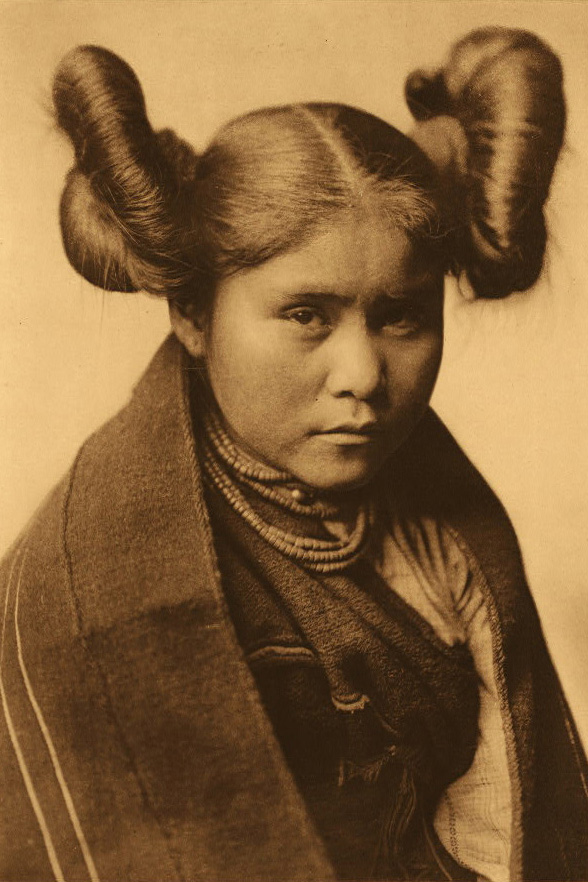
Almost 100 years ago, Edward S. Curtis photographed the Native American people as a proud and noble nation, mindful of their tradition despite the encroachment of European settlers. Today, the story is a bit more complicated as the increasing Americanization of their people has had vastly different results. One of the more regretful stories is the Pine Ridge Indian Reservation as presented in photojournalist Aaron Huey's powerful photo essay.


Aaron Huey is a freelance photographer, having worked in Haiti, Afghanistan, Yemen and many other places for The New Yorker, The National Geographic and the New York Times to name a few. Before his groundbreaking work on the Lakota and Pine Ridge Indian Reservation, his biggest project was his solo walk across the US which took him 154 days back in 2002.


In 2010, Huey presented a TED Talk on America's native prisoners of war; his talk was about the Lakota people and how the rest of America seemed to have forgotten about this old community.

The Lakota are a Native American tribe and are part of the Sioux Nation, being the original settlers of North and South Dakota. Today, about half of the approximately 100,000 Lakota now live in different reservations in these regions and in the surrounding states.


Huey's visit to Pine Ridge was originally supposed to be part of a larger series on poverty and gang violence in America, but he was so taken by the people and the place that he stayed on, never having finished his original assignment.

The place was designated as Prisoner of War Camp #344 during the American Indian Wars, and although it is now known as Pine Ridge, it still feels like a prison camp in many ways. The reservation is considered ground zero for Native American Indian issues as it was the site of the Wounded Knee Massacre which resulted in the deaths of over 150 men, women and children against a heavily armed US army.


The Wounded Knee massacre is not only horrific in nature, it is also symbolic of how the US government disregarded the Native American's rights and treaties in favor of their own interests. That kind of apathy is still present today and the resulting circumstance of the Lakota is the focus of Huey's work.

In Pine Ridge in particular, the worst of all possible cases is present; more than 90% of residents are below the poverty line in America, around 80 to 90% are unemployed, 70% of children drop out of school, and the life expectancy of men is 46 to 48 years of age which is on par with Afghanistan and Somalia. One would think that these figures wouldn't exist in the US, but somehow the government has continued to ignore these people.

Even when the US Supreme Court awarded a $122 million settlement to the Sioux Nation for the treaties the US government breached in taking the Sioux's land, they missed the point; the Lakota rejected the settlement saying that "The Black Hills are not for sale."


Instead of simply concluding this  project and putting it on the shelf, Huey wants to increase awareness of this situation across America. While other photographers and artists would be content with an exhibition of their works, Huey opts to work at the grassroots level, tapping the talents of artists Ernesto Yerena and Shepard Fairey to help propagate the information and images he's gathered on the Lakota.

You can help by simply learning more about Aaron Huey's Pine Ridge photo essay here. His TED talk is still online and is a powerful introduction into the subject. The Honor the Treaties website is the natural culmination of Huey's work for the past six years and offers more information on the past and present of the Sioux Nation.

Edward S. Curtis: The First Americans


Today, the 4th of July, marks the Independence Day of the United States, which makes it the perfect excuse for festivities, fireworks, fanfare, and fun of all forms for people across the country. Today is also good day to remind Americans about the first settlers of the continent, the American Indians. Many records were made of these people and their culture before great changes came into their way of life, but none equal the beauty and scope of the works of photographer Edward S. Curtis.


The North American continent was already settled as far back as 12,000 years ago, and before the earliest European explorers arrived around the 15th century, there were already several hundred distinct cultures and languages that stretched from the Eastern United States to the Great Planes to Alaska.

By the end of the 19th century however, Native American Nations were under pressure by the US government and white settlers to either relocate or assimilate into the European-American culture. While some natives were able to adapt to the western culture, this meant that much of their traditional ways were being forcefully removed.


At around this time, Edward Curtis was just beginning his career in photography, having just opened a studio in Seattle. He was more of a society portrait photographer, but by 1900, he had joined a scientific expedition to Montana to photograph the Blackfeet Indians living there.


Curtis' began his documentation of the North American Indian people in earnest when famed industrialist J.P. Morgan granted $75,000 to the photographer in exchange for a series of 1,500 photographs on the subject. Curtis accepted the offer but went above and beyond the requirement by documenting tribal history, traditions, housing, foods, activities and customs of the people that he encountered.

In total, Curtis took more than 40,000 photographs from 80 different tribes, ultimately taking him over 30 years to complete. His photographic and written record of some of these tribes and notable individuals are the only recorded accounts of some of these indigenous groups, making his entire documentary career invaluable to American history.


Today, much of his photographs are praised for their authenticity and beauty, but there have been some controversy over the manner in which he made and edited some of his images. There have been cases where the same garment is found in different photographs of different tribesmen. He was also known to alter or retouch his negatives and positives by removing umbrellas, western accessories and anything that wasn't intrinsically Native American. There have also been cases where he paid individuals to reenact scenes in lavish attire.

Many others defend his work stating that these inaccuracies were not intentionally dishonest in nature, but were Curtis' way of providing a permanent visual record to future generations of what would otherwise be a lost tradition. Many agree that this was an unfortunate result of the kind of ethnographic romanticism that Curtis had for the American Indian people, resulting in the quality of photographs that portray these people in their seemingly unspoiled state.


Many different collections of Curtis' negatives and prints are scattered all over the US, but probably the best resource for modern day photography and history enthusiasts is Edward S. Curtis's The North American Indian by the Library of Congress and Northwestern University. Over 2,000 digital images are freely available in good resolution, along with accompanying descriptive texts. The site is definitely worth a visit if you have a few hours to spare.

The different collections of Curtis' work are also available in many publications. Among the best reviewed are Edward S. Curtis: Visions of the First Americans, Edward S. Curtis: The Great Warriors, and The Many Faces of Edward Sherriff Curtis: Portraits and Stories from Native North America.